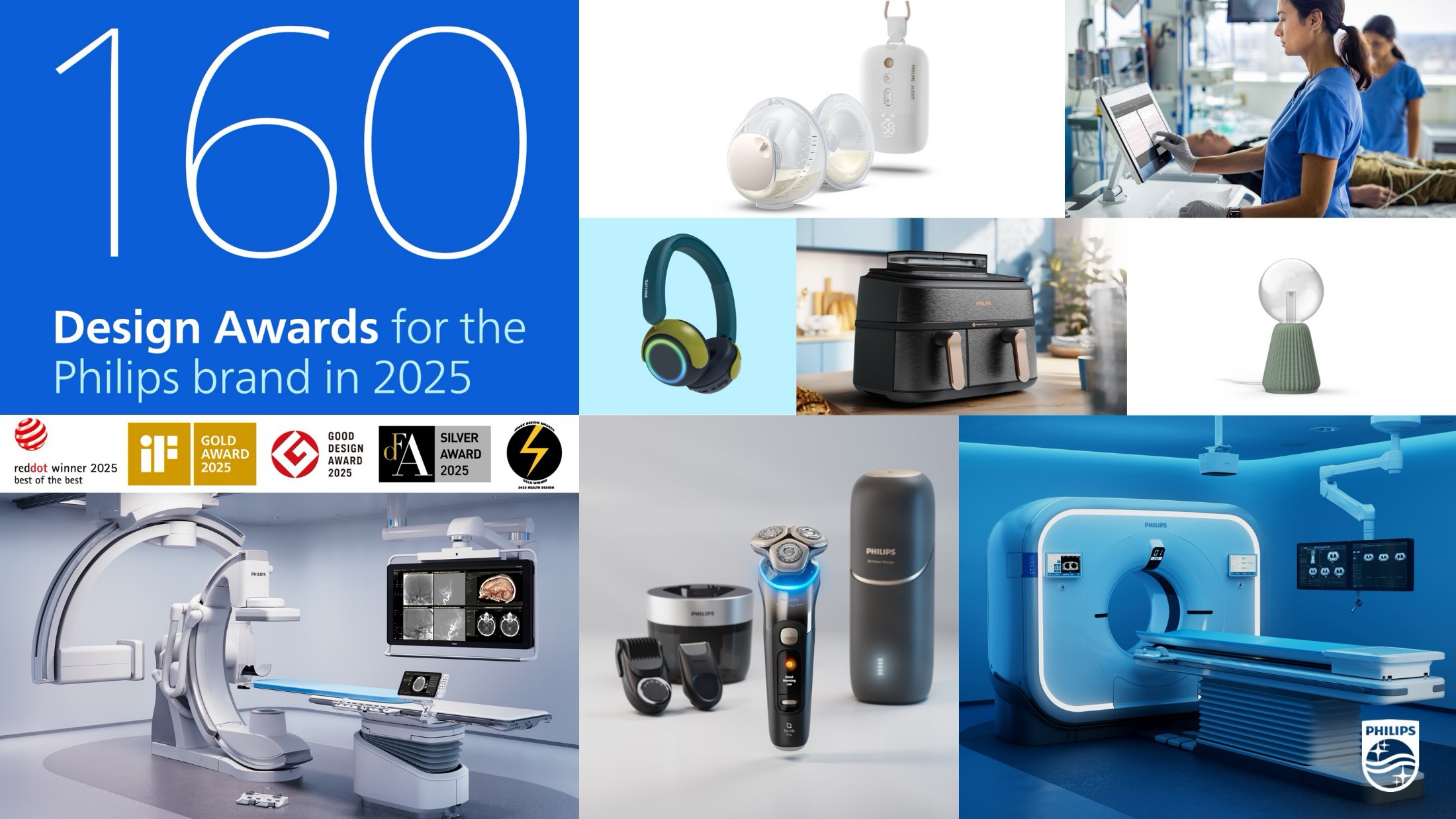
Philips Azurion Neuro Biplane
Human-centered design at its best. The Philips Azurion Neuro Biplane system was awarded the iF Design Gold Award 2025 — one of just 75 Gold Awards selected from nearly 11,000 submissions across 66 countries.
Recognized for its intuitive user experience, elegant form language, and powerful clinical functionality, the Azurion Neuro Biplane supports physicians during high-stakes neurovascular procedures like stroke and aneurysm treatment. The international jury described it as "human-centered design at its best."

"Despite its immense size and complexity, the form language is soft and friendly. This feels like a safe pair of hands."
— iF Design Award Jury
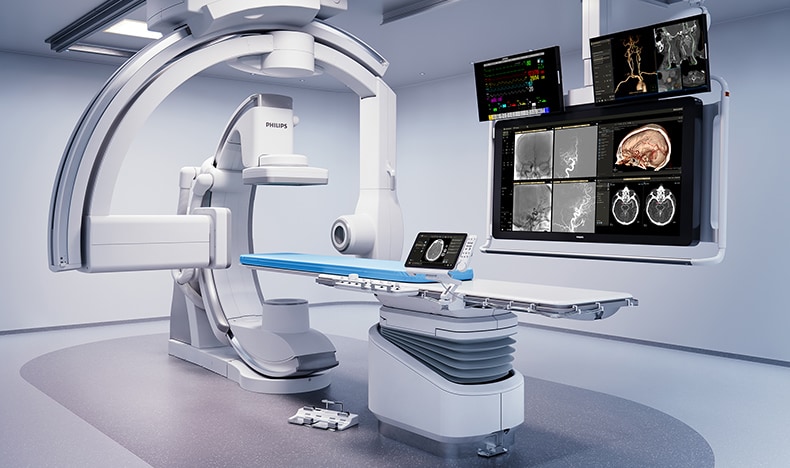
"This recognition is a tribute to years of co-creation with clinicians, observation inside real angio suites, and design driven by deep user understanding. Every design choice — from the ergonomics of FlexArm to intuitive table-side control — was guided by the needs of patients and care teams."
— Peter Skillman, Global Head of Design at Philips
Designed for neurovascular procedures where every second counts, the Azurion Neuro Biplane enables clinicians to transition seamlessly between 2D and 3D imaging, improving workflow speed and diagnostic precision. Features such as SmartCT, flexible C-arm rotation, and fully integrated controls allow teams to maintain focus during high-pressure interventions.
Since its launch in 2017, Philips' Azurion platform has become one of the most widely used image-guided therapy systems in the world — enabling over 6.4 million patient procedures each year across more than 80 countries.
In addition to the Gold Award for the Azurion Neuro Biplane, Philips received a total of 48 iF Design Awards in 2025, including the Philips Capsule Surveillance system, the Cardiac Workstation, Interventional Cardiology Reporting solutions, the Radiology Operations Command Center (ROCC), and advanced imaging technologies like the Spectral CT 7500 and Zenition 90.
Philips LumiGuide — 3D Medical Device Guidance
Philips' LumiGuide 3D medical device guidance solution received the Red Dot: Best of the Best award in the 'Innovative Products' metacategory — the highest distinction in one of the world's largest design competitions, with around 20,000 entries per year.
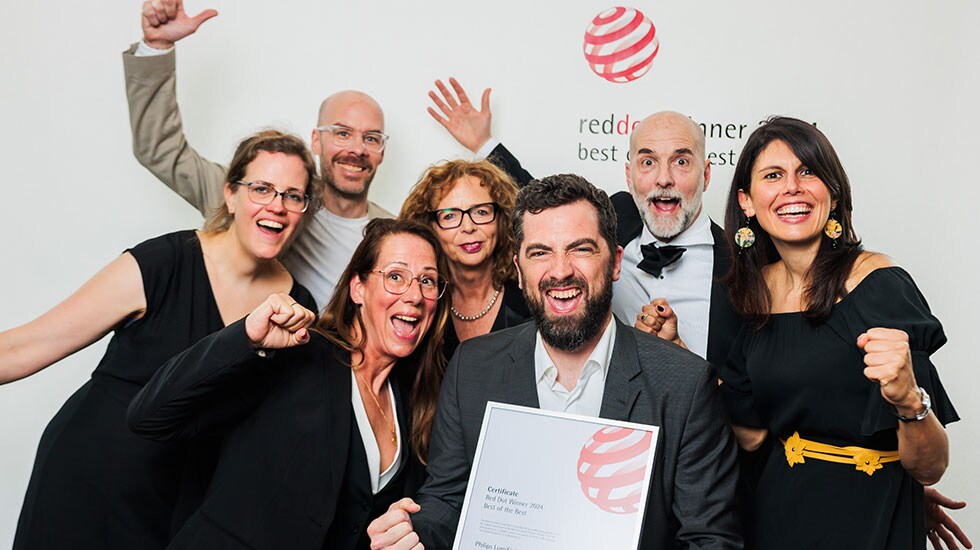
"This innovation not only revolutionizes instrument guidance in minimally-invasive procedures, but also aims to protect patients and medical staff."
— Red Dot Jury
The Technology: Fiber Optic RealShape
During minimally-invasive surgeries, doctors typically rely on live X-ray imaging (fluoroscopy) to manipulate catheters inside the patient's body — but real-time fluoroscopy comes with radiation risks and only provides grayscale, 2D images.
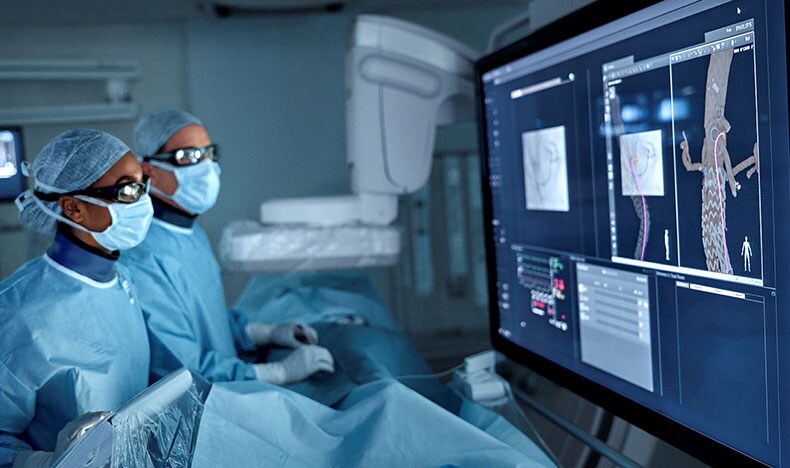
LumiGuide — powered by Philips' unique Fiber Optic RealShape (FORS) technology — changes the game by allowing doctors to see their guidewires and catheters in 3D and color as they manipulate them inside the patient's body, from any angle, in real-time, and with minimal radiation.
Also Awarded: Digital Radiography 7000 M
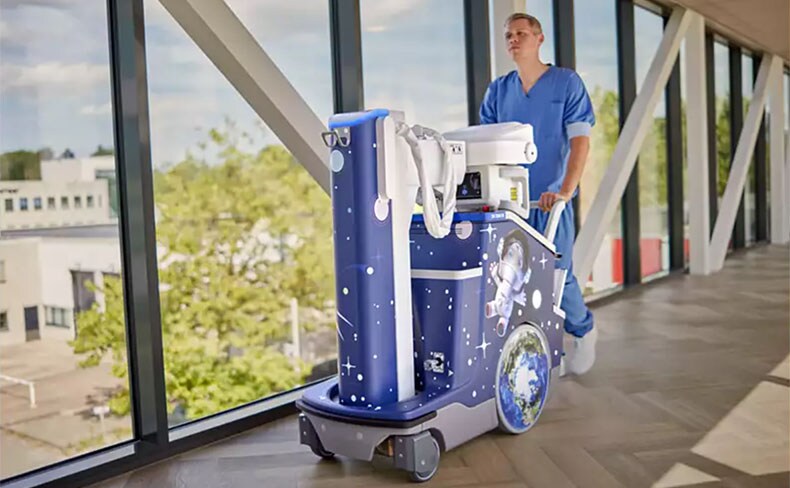
Philips' Digital Radiography 7000 M mobile radiography solution also received a 2024 Red Dot Award. Powered by an internal lithium-ion battery, the system can be wheeled to a patient's bedside for diagnostic imaging within seconds — designed with workflow optimization, ease-of-use, and patient centricity in mind. Adorned with colorful friendly graphics, it is especially useful in pediatric care.
"High-impact innovation must not only be founded on the voice of the customer, it must also be based on a continuous relationship with academic, clinical, and industrial partners to co-create it, and public-private partnerships to prove its effectiveness in real-world scenarios."
— Peter Skillman, Global Head of Design at Philips
Innovation, Design, and Sustainability
These awards exemplify Philips' approach to patient-centric innovation, which starts with the recognition and in-depth understanding of user needs. The design teams strictly adhere to three key innovation principles:
- Creating scale — designing for global impact across healthcare systems
- Working backwards from customer needs — co-creating solutions with clinicians
- Sustainability built in from the outset — end-to-end carbon footprint, design for circularity (reuse, repair, recycling)
The result: user-friendly solutions that are easy to use, learn, and set up, integrate well into existing workflows, and are sympathetic to the needs of the planet.
Read full article on Philips → Philips Experience Design on Red Dot →